



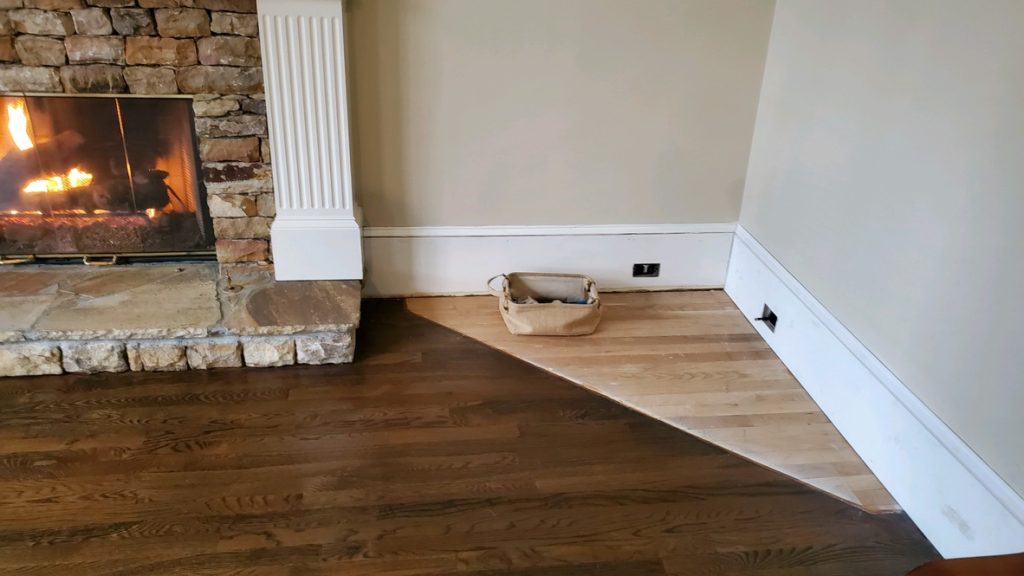

 If you have a wood-burning fireplace or stove, then that is the only thing you should be burning in it—wood. Burning paper, trash, or other plant materials can pose several hazards, such as putting off dangerous chemicals and can cause the fire to spark more often. This increases the likelihood of someone nearby getting burned, or of your hardwood floors being marred by these flying embers.
Additionally, you should never use combustible materials like grease or gasoline to start your fire. This can be extremely dangerous to you. Plus, lighter fluids and other such materials – as well as paper and plant matter as described above – can make your fire burn hotter. The hotter the fire, the more likely it is that your beautiful hardwood will be warped or discolored by the heat.
If you have hardwood floors (or you’re considering getting them) and also have a fireplace, please keep these things in mind and take the proper steps to protect your flooring from damage. If you do, your hardwood flooring will stay beautiful and vibrant for years to come.
Start with the hearth extension, because code already tells you the minimum
The non-combustible pad in front of the firebox is called the hearth extension, and its whole job is catching what falls out. Residential code sets the size, and a lot of older Atlanta homes fall short of it.
For a fireplace opening under 6 square feet, the extension must reach at least 16 inches in front of the opening and 8 inches past each side. For an opening of 6 square feet or more, that grows to 20 inches in front and 12 inches to each side.
Go measure yours. If the stone or tile stops short of those numbers, your hardwood is inside the zone the code assumes will catch embers. That is the single most common reason we see scorch marks on a floor.
Radiant heat does something slower and easier to miss
Sparks leave obvious marks. Heat does its damage quietly.
Wood flooring is happiest when indoor relative humidity stays between 30 and 50 percent. A fireplace running through a Georgia winter pushes the air in that room well below the bottom of that range, and the boards nearest the hearth dry faster than the boards across the room.
Wood that loses moisture shrinks. Shrinking unevenly is what opens gaps between boards, and in a bad winter it is what splits a board along the grain. You will notice it first as a line of gaps fanning out from the hearth while the far side of the room looks fine.
A hygrometer costs very little and settles the argument. If the room sits in the twenties while the fire is going, a humidifier during burning season is cheaper than a repair.
What the damage actually looks like
- Small dark pits near the hearth. Ember burns. They usually go deeper than the finish.
- Gaps that widen toward the fireplace. Seasonal drying, not installation error, if they close up again in summer.
- Cupping, then a split. The board dried unevenly top to bottom.
- A cloudy or crazed patch on the finish. Heat damage to the polyurethane rather than the wood.
- Discoloration under a rug’s edge. A rug that traps heat against the boards.
The finish-only problems are the good news. A cloudy patch often comes back with a screen and recoat. Once a board has split or a burn has gone into the wood, that board gets replaced and blended.
What to do before burning season
- Measure the hearth extension against the numbers above. Add a non-combustible pad if it comes up short.
- Burn seasoned hardwood only — no paper, trash, plant material, grease, or lighter fluid. All of them spark more and burn hotter.
- Use a fitted screen or glass doors. A screen with gaps at the base is not doing the job.
- Put a hygrometer in the room and aim to hold 30 to 50 percent.
- Keep a rug clear of the hearth rather than butted against it, so heat is not trapped at the edge.
- Sweep embers and ash off the floor rather than letting them sit. Ash is alkaline and will dull a finish.
If your floor already took the hit
Most fireplace damage is local, which works in your favor. A handful of scorched boards near a hearth is a repair, not a whole-floor replacement, and blending new boards into an existing floor is routine work when the species and finish are matched properly.
Of course, damage does happen. Whether your flooring has been damaged by a fireplace, your pets, or simple time, contact Atlanta Floor One for hardwood floor refinishing in Roswell. We’ll help get your floors back to their previous, vibrant shine.
Atlanta Floor One handles hardwood floor sanding and refinishing throughout the north metro. If you are unsure whether you are looking at a finish problem or a wood problem, that is worth a look before another winter runs through it — the difference decides whether this is a recoat or a board replacement. Our guide to protecting hardwood floors covers the rest of the seasonal list.