




Hardwood floors age like a favorite leather jacket, they look better with character, until the “character” turns into deep scratches, dull lanes, and dented boards. The frustrating part is how fast it happens. A little grit by the door, a wet dog trot, a chair dragged an inch, and the finish starts to give up.
Protecting hardwood flooring from wear matters because small damage stacks up, and repairs later cost more than prevention now. The usual troublemakers are grit, moisture, dragged furniture, pets, and the wrong indoor humidity. The good news is you don’t need fancy tools or a complicated routine.
Below is a simple plan that works for homeowners and renters, even in busy homes with kids and pets.
Stop scratches at the source with a simple daily and weekly routine
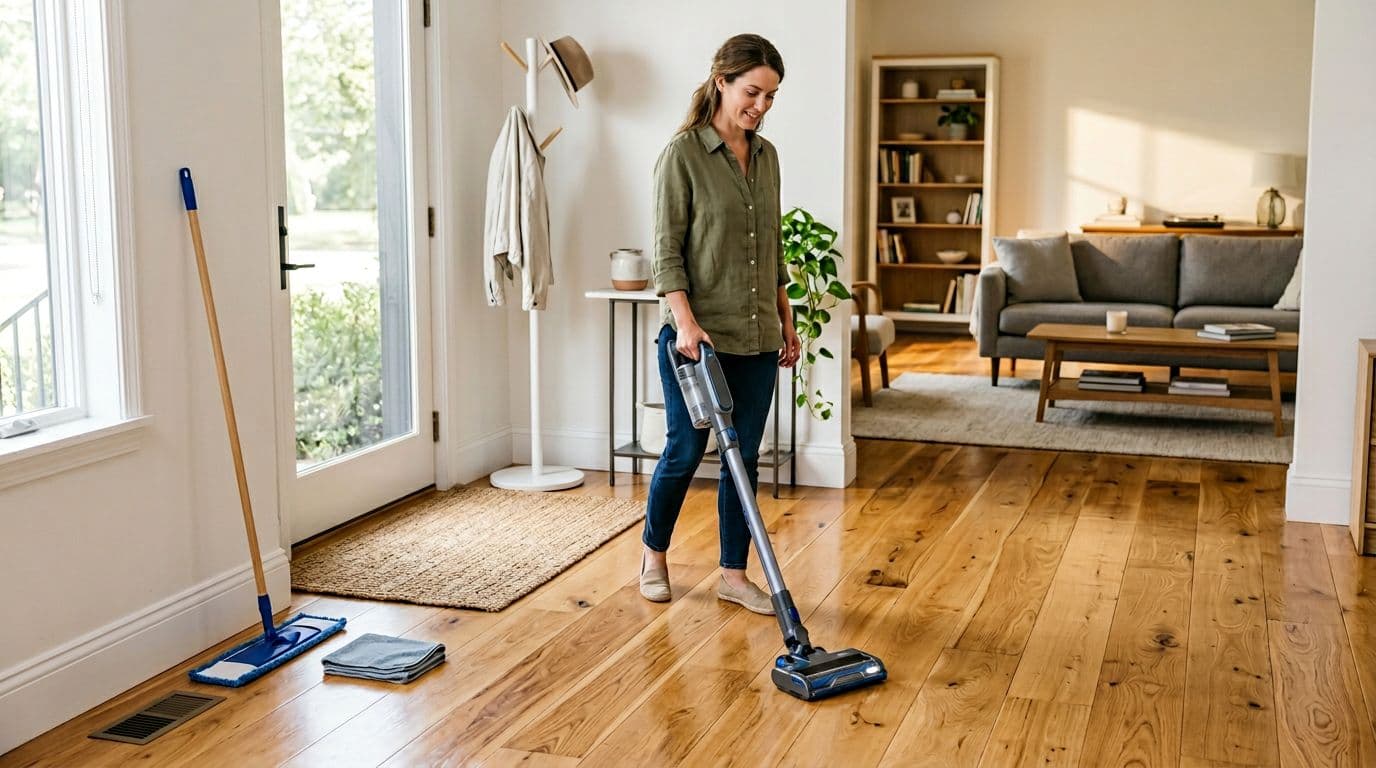
If you only change one thing, make it this: remove grit early and often. Grit is tiny, but it acts like sandpaper under shoes and paws. Water is the other big threat, because wood swells, stains, and the finish can cloud or peel.
A realistic routine looks like this:
- Daily or every other day: Dry dust-mop high-traffic paths (entry, kitchen pass-through, hallway).
- Twice a week: Vacuum edges and corners where grit hides.
- Weekly: Damp mop with the right cleaner (not a soaking mop), then fully dry.
- Always: Wipe spills right away, even “just water.”
These small steps protect the finish, which is your floor’s first line of defense.
Sweep and vacuum the right way so grit cannot act like sandpaper
A broom can help, but a microfiber dust mop is usually better because it grabs fine particles instead of pushing them around. Focus on the paths people actually walk, because those lanes dull first.
Vacuuming matters too, as long as the vacuum is set up for wood. Use hard-floor mode if your vacuum has it. Turn off the beater bar (or brush roll) so stiff bristles don’t scuff the finish. A soft brush attachment works well along baseboards and under toe-kicks.
Renting and don’t want to buy a big machine? A lightweight stick vacuum with a hard-floor head is often enough. Just check that the wheels feel smooth and the attachment doesn’t have exposed plastic edges that can scratch.
If you can hear grit crunch under your socks, the finish is already taking a hit.
Mop safely, clean spills fast, and skip harsh cleaners that dull the finish
When people damage hardwood while “cleaning,” it’s usually too much water or the wrong chemical. A damp microfiber mop is the safest default. Think “barely wet,” not “dripping.” Less water is better because standing moisture can sneak into seams.
Choose a pH-neutral wood floor cleaner made for sealed hardwood. It should clean without leaving a hazy film. On the other hand, avoid products that can etch, soften, or dull the finish over time.
Skip these on hardwood:
- Steam mops
- Soaking wet mops
- Vinegar or ammonia
- Bleach
- Heavy waxes or oil soaps (unless your floor is truly an oil-finish and you know it)
For spills, keep it simple: blot first, then wipe with a lightly damp cloth, then dry the spot. In kitchens, don’t let dishwater puddles “air dry.” They can leave a dull ring.
Build a protective barrier in high-traffic spots (entryways, kitchens, hallways)
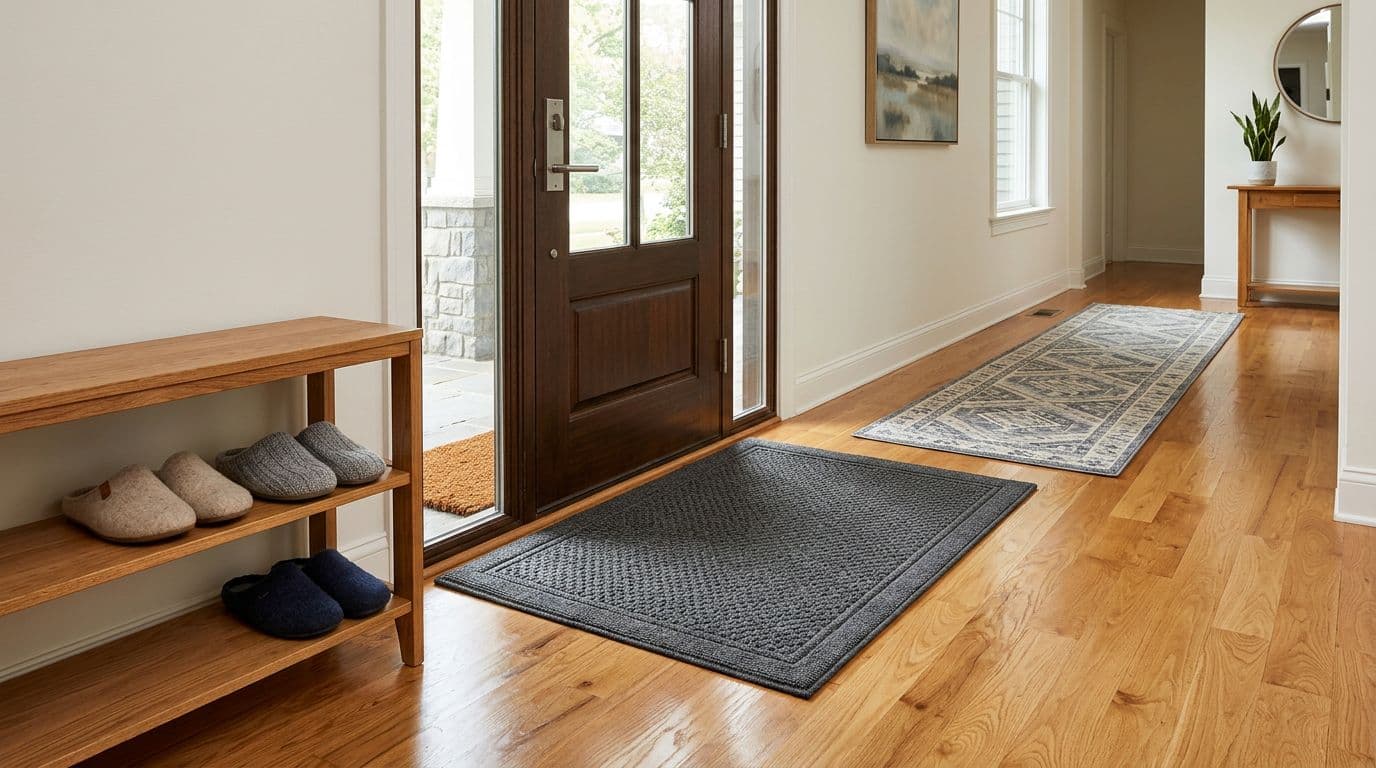
The fastest way to cut wear is to protect the places that get hit first. Entries, hallways, and the kitchen are where grit, water, and foot traffic collide. Instead of fighting damage everywhere, you’re building a “buffer zone” where mess gets trapped before it reaches the boards.
This doesn’t have to feel strict. It’s more like setting your home up so the right choice is the easy choice.
Use doormats and runner rugs that trap dirt, without staining the wood
A two-mat system works because it handles both chunky debris and fine grit. Put a tougher mat outside the door to knock off dirt. Then use an absorbent mat inside to catch what’s left, plus moisture.
In hallways and kitchens, pick low-pile runners that are easy to vacuum. Avoid thick shag that holds grit deep down. Also, keep rugs clean. A dirty mat can rub grit into the finish, which defeats the point.
Rug pads matter as much as the rug. Use a wood-safe, non-staining pad. Avoid rubber or latex backs that can discolor some finishes, especially over time. Every few months, rotate rugs so sunlight and traffic wear the floor more evenly.
Set a no-shoes (or soft-shoes) habit that people will actually follow
Shoes track in grit, and some shoes do direct damage. High heels can dent, cleats can gouge, and wet boots carry moisture. Instead of policing everyone, make it easy.
Try a simple guest line: “We’re a shoes-off house, but grab slippers if you want.” Then place a small shoe rack or tray by the door, plus a basket of clean slippers or grip socks. Most people follow the vibe you set.
Pets need a plan too. Trim nails so they don’t click like tiny chisels. After walks, wipe paws at the door. In addition, place a waterproof mat under water bowls and feeding areas so splashes don’t soak into seams.
Prevent dents, dull spots, and long-term wear with smart protection and timely refinishing
Daily cleaning and rugs handle most surface wear. Next, protect the finish from repeated impact, control humidity so boards stay stable, and refresh the topcoat before bare wood shows. That’s how floors last for decades.
Modern finishes also help. Many homeowners like ultra-matte looks right now because they hide dust and small scratches. Today’s durable water-based coatings can still hold up well, even with a lower sheen, when applied correctly.
Protect the finish from furniture damage before it happens
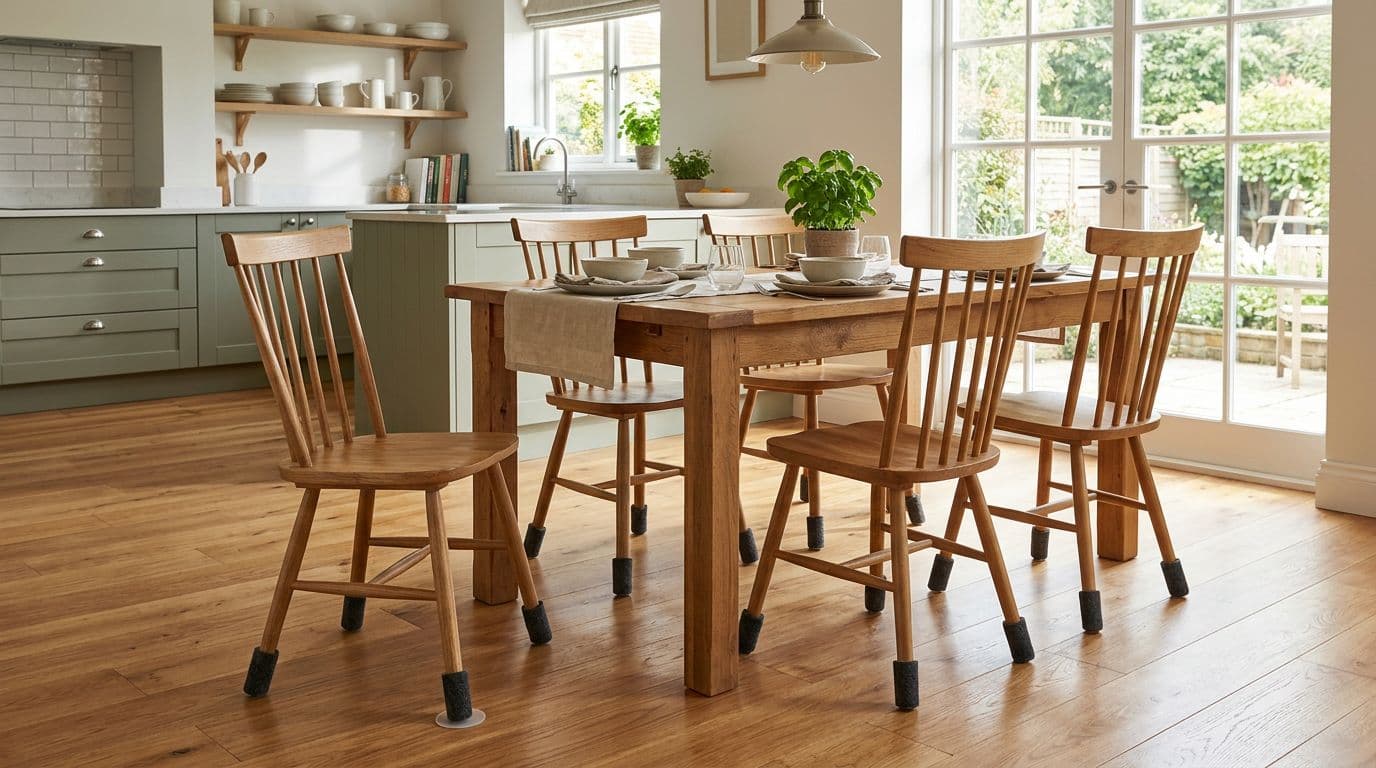
Every chair leg, stool, and side table should have a felt pad. Not “most,” all of them. Grit sticks to felt, so check pads often. Replace them when they look dirty, thin, or flattened.
When moving furniture, lift it or use sliders. Dragging a couch one time can cut a deep track that cleaning can’t fix. Office chairs deserve special attention too. Hard wheels roll grit and grind it in, so use a hardwood-safe chair mat or swap to soft, floor-friendly casters.
Renters can keep it simple with removable felt discs and clear floor guards that peel up cleanly when it’s time to move out.
Control indoor humidity so the boards do not gap, crack, or cup
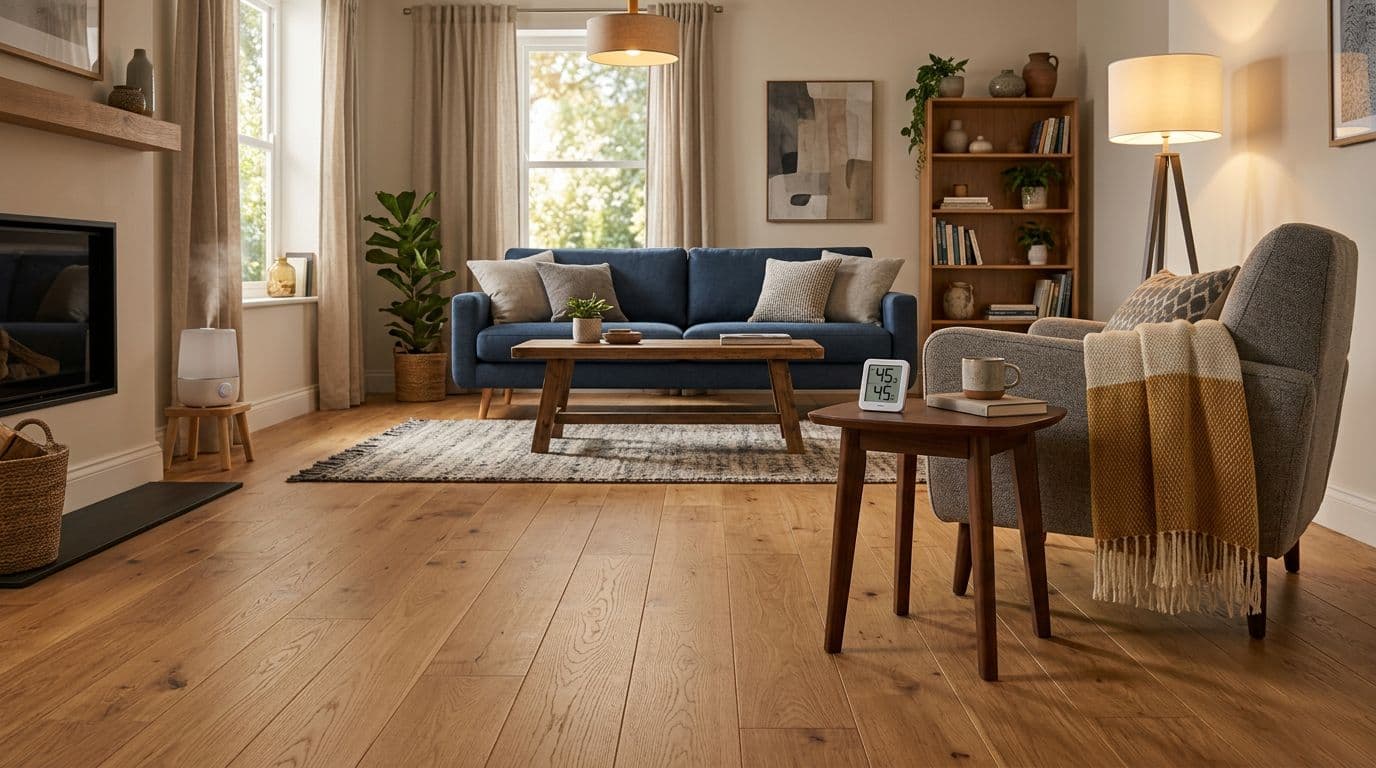
Wood moves with moisture in the air. When the air gets too dry, boards shrink and you see gaps. When it stays too humid, boards swell and can cup (edges rise) or crown (middle rises).
Aim for 35 to 55 percent indoor humidity. A small hygrometer is cheap and removes the guesswork. In winter, a humidifier can prevent over-drying from heat. During humid months, a dehumidifier or properly sized HVAC can bring levels down.
Know when to screen and recoat vs when it is time to refinish
Recoating (often called screen and recoat) means adding a fresh protective top layer. Refinishing means sanding down deeper, then rebuilding the finish system. Recoating is faster and less disruptive, but it only works if the wood itself isn’t exposed.
Watch for these signs:
- Recoat soon: finish looks dull in paths, light scratches, water no longer beads
- Refinish time: gray or dark spots, deep grooves you can feel, bare wood showing, widespread peeling
Timelines vary with traffic, pets, and sunlight. If you’re unsure, it’s smart to get an expert opinion before damage reaches bare boards. Book a measurement or inspection.
Conclusion
Hardwood doesn’t wear out overnight, it wears out one small choice at a time. Start by removing grit with the right sweep, vacuum, and light mop habits. Next, block traffic wear with mats, runners, and a shoes-off setup that feels normal. Then protect contact points with felt pads, keep humidity in the safe range, and refresh the finish before wood shows. Do those basics, and your floors will look good longer with fewer surprises. Consistency beats intensity every time.
Your home deserves to look its absolute best. At Atlanta Floor One, we specialize in turning worn-out wood into stunning centerpieces. We offer cost-effective rates, turnkey service, and our amazing team handles everything from the initial sanding to the final coat!Ready to fall in love with your home again?