



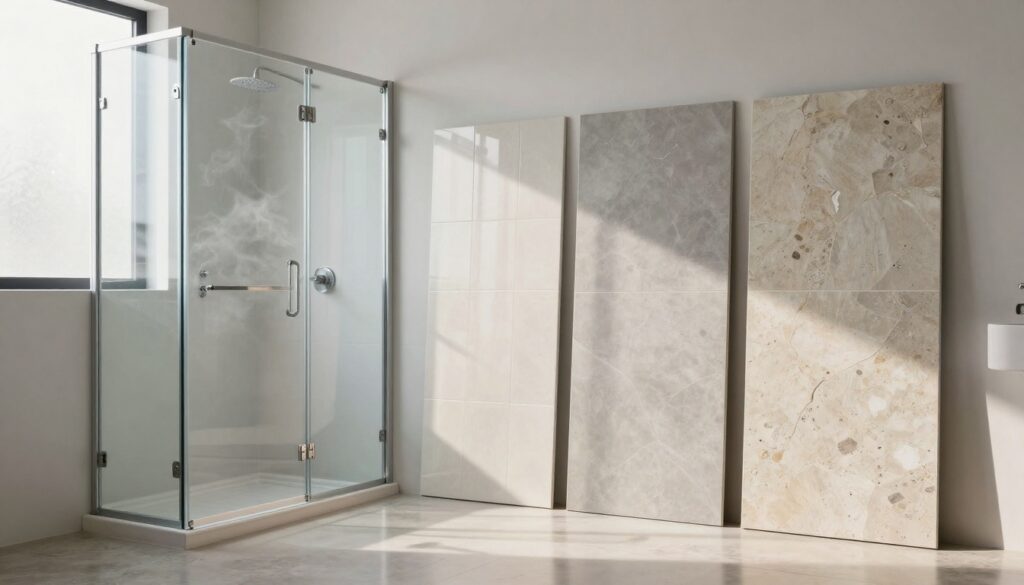
A bathroom looks calm, but it works hard. Water hits the same surfaces every day, steam hangs in the air, and soap and shampoo leave residue where we least expect it. In a shower remodel, tile is not just style, it is safety, hygiene, and long-term protection in one finish.
Choosing correct type of tile material for bathrooms and showers comes down to how the tile handles water, traction, and cleaning, not just color. In this guide, we compare porcelain, ceramic, and natural stone for shower walls, shower floors, and bathroom floors, so we can pick a material that fits our daily routine and our budget.
What matters most in a bathroom or shower tile
Bathroom tile decisions are easier when we focus on a few practical factors. First is water exposure. A tile that performs well on a backsplash may fail on a shower floor where water sits longer. Next is durability. Bathrooms see dropped bottles, sliding stools, and heavy foot traffic, so chips and cracks matter.
We also want to think about maintenance in real life. If we know we will not reseal surfaces or use special cleaners, we should choose a tile that forgives busy weeks. Finally, we need to match the tile to the location. Shower floors need grip, walls need easy cleaning, and bathroom floors need wear resistance and comfort.
For homeowners planning a full upgrade, it also helps to read a clear prep checklist before work begins, including access, dust control, and timing. We can use this guide on how to prepare our shower for tile installation to avoid last-minute stress.
Water resistance and porosity, why it changes everything
Porosity is how much a tile absorbs water. If a tile absorbs more, it can stain more easily and hold moisture longer. Over time, that moisture can feed mildew smells, dark grout edges, and surface discoloration.
Even with “water-resistant” tile, waterproofing behind the tile still matters. Tile and grout are the wear surface, but the waterproof layer behind them is what protects framing and drywall. When we pair a low-porosity tile with correct waterproofing, the shower stays stable for years.
Slip resistance, grout, and everyday cleaning
A glossy surface can look sharp, but it can also feel slippery when wet. For shower floors, we usually prefer matte or textured finishes because they increase traction and hide water spots. Grout plays a role too. More grout lines can add grip, but they also add cleaning time.
A few simple habits keep any tile looking better:
- Wipe the shower walls with a squeegee after use.
- Use a pH-neutral cleaner instead of harsh acids or bleach.
- Vent the bathroom during and after showers to reduce moisture load.
Porcelain vs ceramic vs natural stone, the real differences homeowners feel
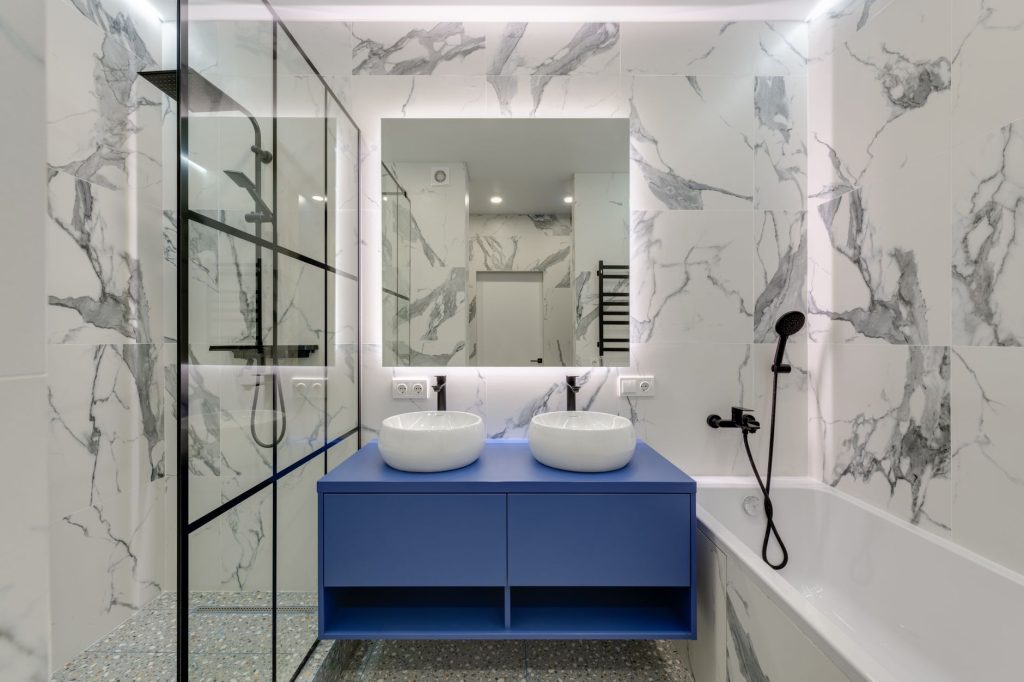 Photo by Max Vakhtbovych
Most of us want the same outcome: a shower that looks clean, feels safe, and does not demand constant care. The best tile depends on which tradeoffs we accept.
Porcelain is the current favorite in many remodels because it is dense, water resistant, and tough in daily use. As of January 2026, market direction continues to favor porcelain, especially marble-look porcelain and other stone looks that give a high-end style without the sealing routine of real stone. Matte and textured finishes are also common, mainly because they are safer underfoot and hide residue better than high gloss.
Ceramic is often more budget friendly and works well in many bathrooms, especially on walls. The main difference homeowners notice is that ceramic can be easier to chip, and in wet zones it may need more careful placement and installation choices.
Natural stone has a depth and variation that manufactured tile cannot fully copy. It can feel like a spa, but it asks more from us. Stone is more likely to stain, etch, or darken in damp areas if we skip sealing or use the wrong cleaners.
If we want a broader view before we decide, this comparison on choosing between porcelain, ceramic, or stone shower tiles is a helpful companion read.
Porcelain tile, best all-around for showers when we want low maintenance
Porcelain is fired at high heat and ends up dense and less absorbent than most ceramic. That density is why it handles showers so well. In a busy home, porcelain resists staining from shampoos, stands up to dropped items, and stays stable with temperature changes.
The tradeoff is installation effort. Porcelain can be harder to cut, and it may cost more upfront. Still, it often wins on long-term value because repairs and replacement are less likely.
We can also reduce cleaning time by choosing large-format porcelain for shower walls. Fewer grout lines mean fewer places for residue to collect. Stone-look and marble-look porcelain are strong options when we want an elegant style without ongoing sealing.
Ceramic tile, a solid budget pick for many bathrooms (with smart placement)
Ceramic can be a smart choice when we want classic style at a lower cost. It works well on bathroom floors and shower walls when it is installed correctly and paired with the right waterproofing system.
Ceramic is usually more porous than porcelain and can be less durable under impact. If it chips, the body color under the glaze may show, which can be noticeable. For heavy-use showers, ceramic is also usually not our first choice for shower floors, where constant water, foot traffic, and traction needs put extra stress on the surface.
Natural stone tile, the luxury look that comes with ongoing care
Natural stone includes marble, travertine, slate, and granite. Each has its own strengths, but they share a key point: stone needs regular sealing and gentle cleaning.
Marble and travertine can stain or etch if we use acidic cleaners or let soaps sit too long. Slate can offer better natural grip, but it still benefits from sealing. Granite is often tougher, but it is not maintenance free.
A simple rule keeps expectations clear: stone can be a great choice when we commit to sealing and mild cleaners. For wet floors, we usually prefer honed or textured finishes for better traction.
Choosing the best tile for our shower walls, shower floor, and bathroom floor
We get the best results when we match tile to how each area is used. For most households, porcelain is the safest “set it and forget it” option across the whole bathroom. It is also a strong choice for rentals because it reduces maintenance calls and holds up to varied cleaning habits.
If we have kids or pets, traction matters more than shine. Matte or lightly textured porcelain helps reduce slips, and it hides paw prints and water spots better. If resale is a goal, marble-look porcelain often reads as high-end without signaling high upkeep to buyers.
Natural stone can still be the right call in the right home. If we enjoy routine care and want a true one-of-a-kind look, stone can feel special every day. Ceramic fits best when we need to control cost and can place it where it will not be punished.
Budget note: if we can spend more in one place, we should prioritize the shower floor and waterproofing system. That is where failures cost the most to fix.
For homeowners looking for installation support, we can review Alpharetta bathroom tile installation services and plan the project around our layout and material choices.
Best picks by location, walls vs floors vs niches and benches
- Shower floor: Choose low-porosity tile with traction (often matte or textured porcelain). Small mosaics can add grip because of more grout lines, but they take more cleaning.
- Shower walls: Large-format porcelain or ceramic makes cleaning easier. Fewer grout joints means less scrubbing.
- Bathroom floor: Porcelain is a strong default for durability and water resistance. Ceramic can work well in many bathrooms, especially with a slip-aware finish.
When we should hire a pro, waterproofing, slope, and long-term peace of mind
Tile is only the finish surface. Waterproofing is the system that protects the structure. A professional installation matters most when the job includes a shower pan, a curb, niches, or benches. These features need correct waterproof membranes, correct slope to the drain, and movement joints so the tile work can handle normal shifts over time.
If we want a shower that performs as well as it looks, we can call 470-352-1156 for a free estimate. If we show any existing written quote from another contractor, we beat it by 5%.
Conclusion
For most remodels, porcelain tile is the best overall choice for showers and bathrooms because it resists water, wears well, and stays easy to clean. Ceramic can be a good value option for bathroom floors and shower walls when we place it wisely and install it correctly. Natural stone delivers a luxury look, but it is best when we accept sealing, gentle cleaners, and steady upkeep.
If we want help choosing materials and planning the install, call 470-352-1156 for a free estimate. If we bring a written quote from another contractor, we will beat it by 5%.