



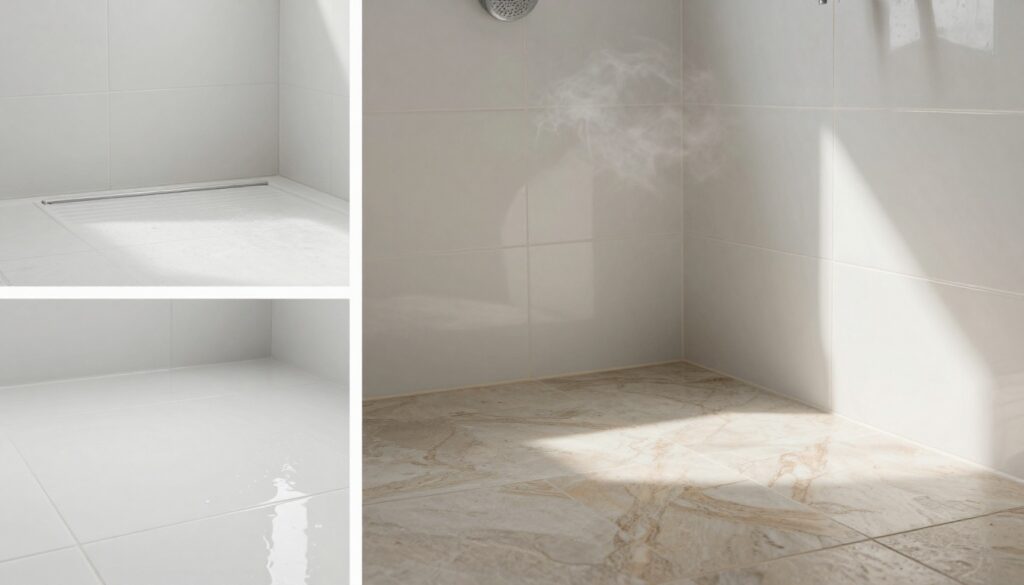
Choosing the right tile for a bathroom remodel can feel like picking a winter coat. It’s not just about the look; it’s about what it has to handle every day. When we help homeowners with choosing the correct type of tile material for bathrooms and showers, we focus on four practical issues first: water resistance, slip resistance, cleaning effort, and budget.
Tile sits in the splash zone, the steam zone, and the drip zone. Your shower floor faces constant water and shampoo residue, while shower walls see less wear but still deal with moisture and soap. Bathroom floors sit somewhere in the middle.
Below, we compare porcelain, ceramic, and natural stone with clear tradeoffs, and we lay out how we choose the best tile for shower floors, shower walls, and bathroom floors.
Porcelain, ceramic, and natural stone, the real differences that affect showers
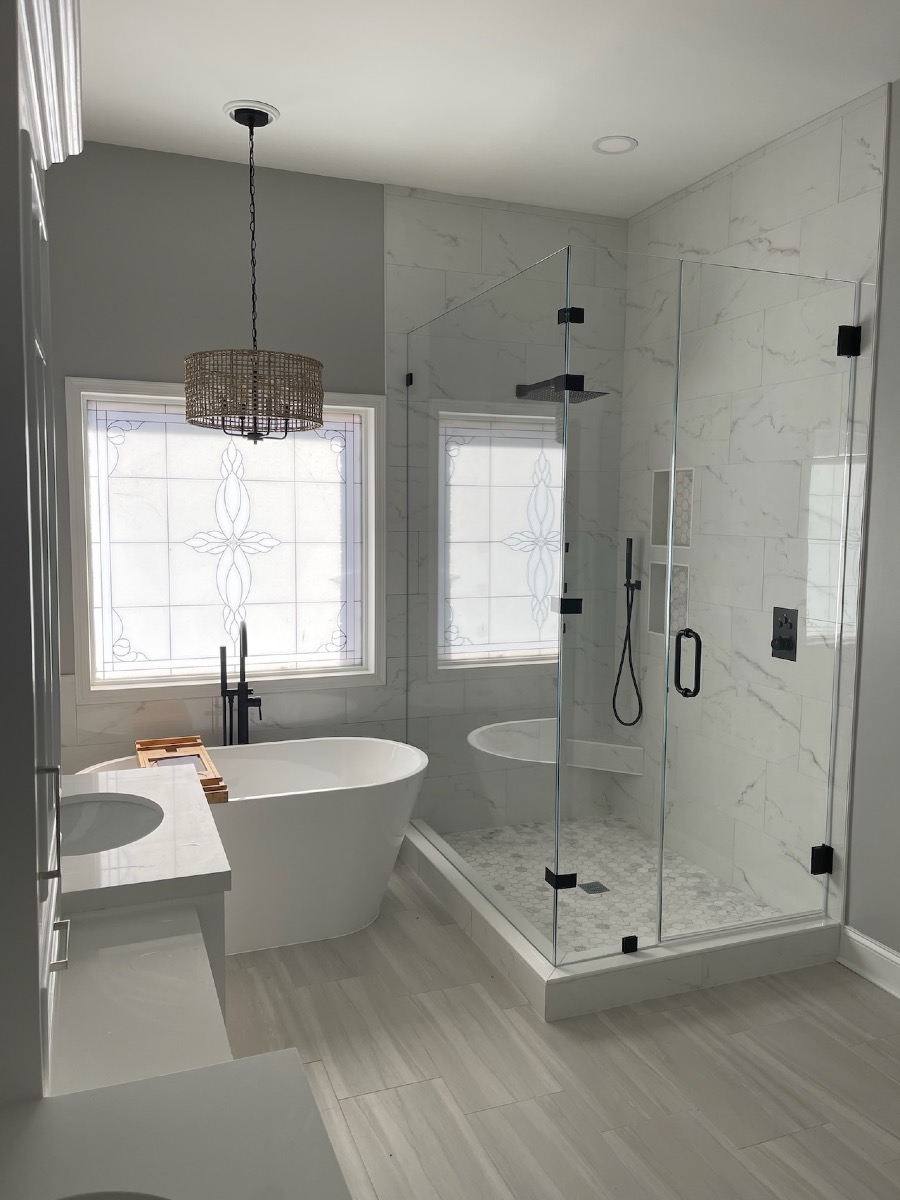
Bathroom tile installation
At a glance, tile is tile. In a wet space, the differences matter fast. The big three factors are water absorption, density, and the surface finish you walk on.
Porcelain tile is a type of ceramic tile, but it’s made from finer clays and fired at higher temperatures. That process makes it denser, less absorbent, and nonporous. Porcelain tile is commonly rated at under 0.5 percent water absorption, which delivers superior moisture resistance. That’s why it performs so well in showers, with fewer staining issues, fewer moisture-related problems like mold and mildew, and better long-term wear.
Ceramic tile is usually a bit softer and more porous than porcelain. Many ceramic tiles are glazed, which helps protect the surface. The core of the tile can still absorb water if the glaze is chipped or if water reaches unprotected edges. In showers, that difference shows up most on floors and in high-traffic bathrooms.
Natural stone tile includes marble tile, travertine, limestone tile, and slate tile. Stone is beautiful because it is natural, but it is also variable. Two tiles from the same box can look different and absorb water differently. Stone can stain, it can etch from common bathroom products, and it often needs sealing to stay looking clean.
Style trends matter too. In January 2026, we’re seeing strong demand for large-format tile and porcelain slabs because they create a calm, seamless look with fewer grout lines to scrub. Textured surfaces and warm, earthy tones are also popular because they hide water spots and feel less sterile than bright white.
Porcelain tile for bathrooms and showers, best all around for moisture and daily wear
Porcelain tile is our default recommendation for most shower remodels because it handles moisture without fuss. The density of porcelain tile reduces staining risk, and it doesn’t require sealing. It also holds up well to daily foot traffic, dropped bottles, and frequent cleaning.
Another advantage is choice. Porcelain can look like marble, concrete, travertine, or even wood, without the upkeep those materials often bring.
There are tradeoffs. Porcelain is heavier, harder to cut, and often costs more than basic ceramic. That usually means more labor time, and it can affect the project budget.
Best uses:
- Shower floors (choose a textured finish)
- Shower walls (including large-format pieces)
- Bathroom floors in busy homes
For safety, we avoid high-gloss tile on wet floors. We also select matte finish surfaces when the manufacturer provides those ratings.
Ceramic tile, a smart budget pick for walls but not always for wet floors
Ceramic tile can be an excellent choice when we want strong style at a lower cost, including glass tile as a stylistic alternative for shower walls. Most ceramic options used in bathrooms are glazed, meaning there is a protective top layer that resists water and makes routine cleaning easier.
Ceramic’s main limits show up with impact and long-term wear. It can chip more easily than porcelain, and if the glaze is damaged, the exposed body can stain. Ceramic also varies widely in quality, so ratings and proper installation matter.
Best uses:
- Shower walls and bathroom walls
- Light-use bathroom floors (only when the tile is rated for floors)
If we’re choosing ceramic, we pay close attention to the floor rating and the surface texture, especially for homes with kids, guests, or older adults.
Natural stone tile, the luxury look with real maintenance needs
Natural stone brings a look porcelain can imitate, but not fully copy. Marble tile can feel classic and bright, slate tile can feel grounded, and travertine can read warm and high-end. Stone also adds character because every piece is slightly different.
That beauty comes with work. Most stone is porous, so it can stain without a penetrating sealer. Many stones can also etch, which is a dull spot caused by acidic cleaners or some personal care products. Polished stone can be slippery when wet, so the finish matters as much as the material.
Best uses:
- Feature walls and accents
- Low-splash areas
- Floors only when we choose the right finish and you’re comfortable with a maintenance plan
If you love the stone look but want easier ownership, stone-look porcelain often gives the same mood with less risk.
How we choose the best tile for each bathroom zone, shower floor, shower walls, and bathroom floor
Tile is the visible surface, but it isn’t the waterproofing. The waterproof membrane below the tile is what protects framing and subfloors. We plan the full assembly, waterproofing, thinset, grout, and movement joints, then we pick tile that fits how the space will be used.
Grout matters too. More grout lines can improve traction on shower floors, but they also add cleaning time. Larger tiles can look cleaner on walls, but they need flat substrates and careful layout.
If you’re planning a remodel, our professional bathroom tile installation approach starts with how each zone performs, not just what looks good on a sample board.
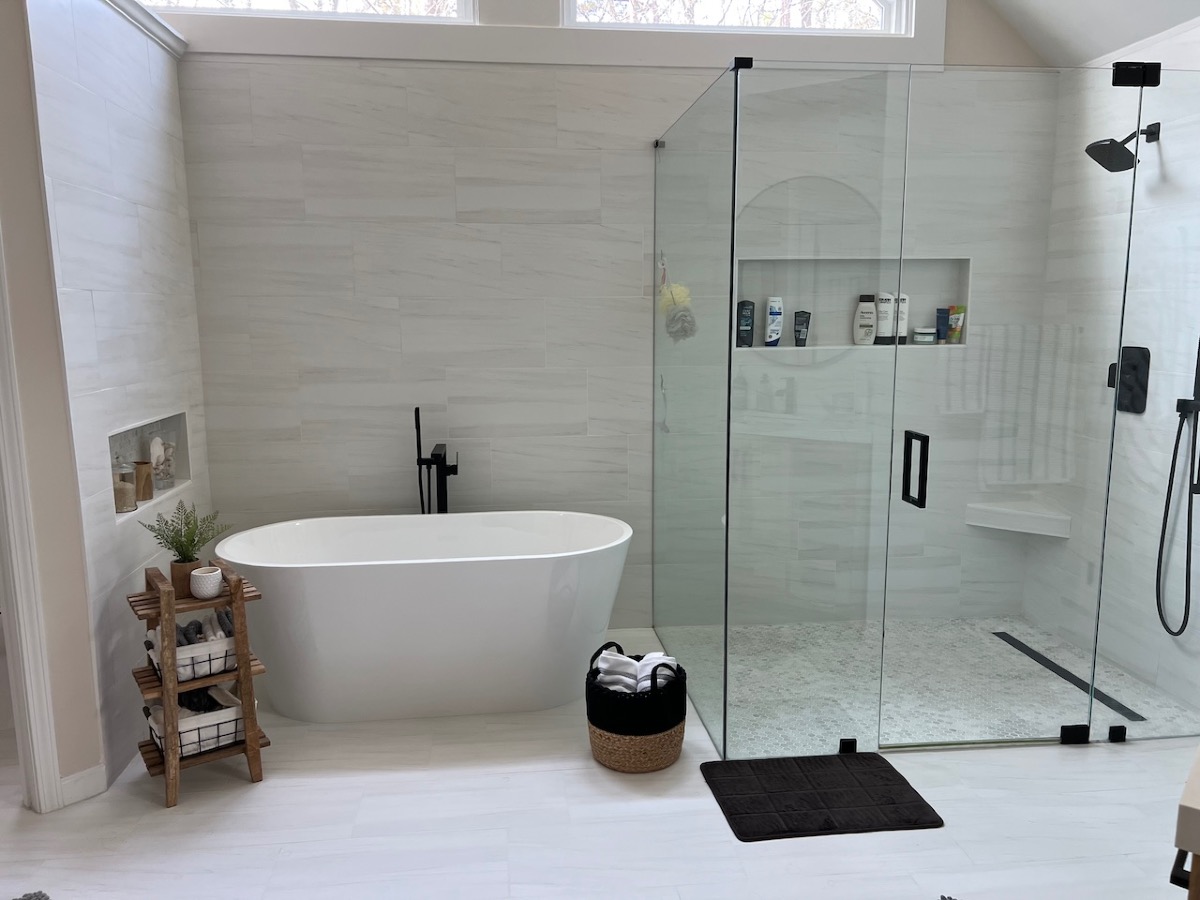 Shower floors, traction and water resistance come first
For most homes, we recommend textured porcelain for the shower floor. It resists water, it holds up to daily use, and it doesn’t require sealing.
We also like smaller formats on shower pans, especially a linear drain as a modern design choice that influences tile selection. Mosaic tiles follow the slope better toward the drain, and mosaic tiles or other smaller tiles help drainage. More grout lines can add traction and improve grip, which is useful where soap and shampoo are present.
A few practical points we follow:
- We choose surfaces made for wet areas, not glossy finishes.
- We match the tile size to the pan slope to avoid lippage.
- We plan grout choice with cleaning in mind.
Polished stone on shower floors is a risk. Even when sealed, it can be slick, and it can show etching and water marks faster than most homeowners expect.
If you want a smoother install experience, it helps to review a shower tile installation preparation guide before work begins.
Shower walls and bathroom floors, balancing looks, cleaning, and cost
Walls are easier than floors because no one walks on them. That means ceramic, porcelain, stone, subway tile, and even glass tile for decorative accents can all work on shower walls, as long as the wall system is waterproofed and the tile is installed correctly.
Porcelain still wins when we want low upkeep, especially for steam showers, kids’ bathrooms, and busy households. Large-format porcelain is also popular right now because it reduces grout lines, which reduces scrubbing.
For bathroom floors outside the shower, we usually choose porcelain first, then floor-rated ceramic when budget is tight. Stone floors can work, but only when sealing and cleaning habits match the material.
Our simple checklist before we buy:
- Water exposure level: splash zone or mostly dry?
- Cleaning habits: quick wipe-downs or deep scrubs?
- Budget: material cost plus labor complexity
- Desired look: natural variation or uniform pattern?
Color and grout choices also change how clean a bathroom looks day to day. If you’re still selecting finishes, our guide to bathroom tile color selection can help narrow options.
Our simple buying checklist, tile ratings, grout, and what to ask your installer
Before you order tile, we confirm the details that affect safety, lifespan, and water resistance. For most bathroom floors, we look for PEI 3 or higher (many homes do well with higher ratings). We also review the manufacturer’s slip resistance guidance for wet areas, since traction varies by finish.
We also check:
- Tile thickness and consistency (important for clean edges, especially terrazzo tile and cement tile)
- Rectified vs non-rectified edges (changes grout joint size)
- Grout type, cement grout for standard installs, epoxy grout when stain resistance matters
- Sealing needs (stone, zellige tile, terracotta tile, and some grouts may need it, especially those that develop a patina over time)
Questions we recommend asking any installer:
- What waterproofing system will you use behind the tile?
- How will you form the shower slope and confirm drainage?
- Where will movement joints go (corners, transitions, perimeter)?
- How do you handle niches and inside corners to prevent leaks?
- What warranty do you provide on labor?
When you’re ready, call 404-578-0926 for a free estimate. If you show us any existing written quote from another contractor, we beat it by 5 percent.
When we weigh performance, safety, and long-term care in your bathroom remodel, porcelain tile is usually the safest all-around pick for bathrooms and showers. Ceramic tile can be a strong value for walls and tight budgets, as long as we choose a quality tile and the right rating. Natural stone is best for its luxury appeal when you want a one-of-a-kind look and you’re prepared for sealing and careful cleaning.
If you want help choosing the right system for your shower floor and shower walls, call 404-578-0926 or make appointment for a free estimate. Bring any written quote you already have, and we’ll beat it by 5 percent.