



Choosing between white oak vs red oak wood flooring sounds simple until samples are on your floor and both look good. Both are true oak, both make strong hardwood floors, and both have a long track record in American homes.
Still, they don’t behave the same way. The reason sits inside the wood itself. White oak has blocked pores called tyloses, while red oak has more open pores. That small anatomical difference affects moisture movement, grain appearance, hardness, stain color, and how the floor ages in daily life.
Once you connect the wood science to muddy shoes, chair dents, pets, and finish color, the choice gets much easier.
The core science, why white oak and red oak behave differently
White oak and red oak both belong to the Quercus genus, but they come from different oak groups. For flooring, the most useful fact is not the Latin name. It’s the way each wood moves water and air through its vessels.
Wood contains long cells that act like tiny tubes. In white oak, many of those larger vessels are plugged by tyloses, which are natural balloon-like growths inside the wood. In red oak, those vessels stay more open. As a result, white oak is usually called more closed-grain, while red oak is more open-grain.
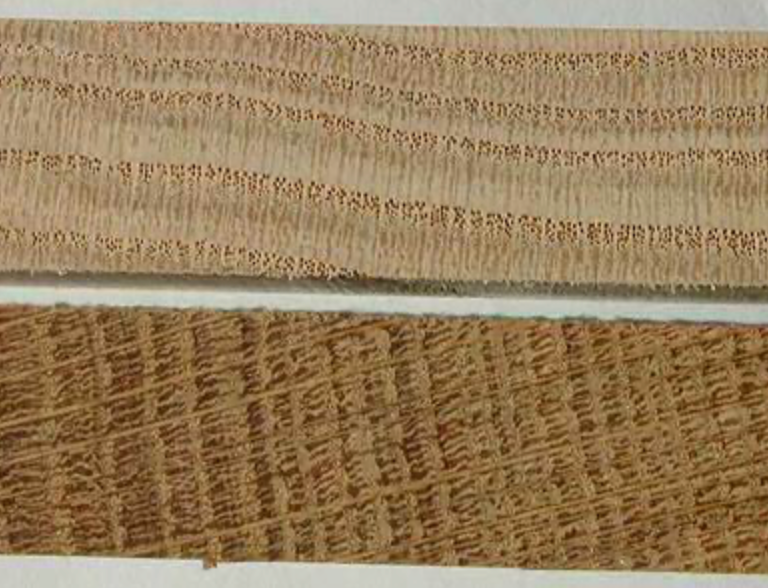
That difference is not academic trivia. It changes how the floor accepts stain, how it reacts to damp air, and how the grain reads across a room.
White oak resists water movement better because tyloses block many large vessels. Red oak leaves more of those pathways open.
Closed pores vs open pores, the difference you can actually see and feel
Picture the pores as drinking straws running through the wood. In red oak, more of those straws stay open. In white oak, many are plugged.
Because of that, white oak often feels tighter and looks more refined under finish. Red oak tends to show a more open texture and stronger grain contrast. If you run your hand across both samples, the difference may be subtle, but the visual effect is easier to catch.
This is also why red oak can read as busier. Its open structure helps create a more active surface pattern, while white oak often looks calmer.
How tyloses give white oak better moisture resistance
Tyloses don’t make white oak waterproof. A wet floor is still a problem, no matter the species. Yet they do slow water movement through the wood.
That helps explain why white oak has a long history in uses where moisture mattered more. In a home, the advantage is modest but real. Small spills, seasonal humidity, and kitchen-adjacent living areas tend to be a bit less stressful for white oak than for red oak.
If your home sees Georgia humidity, this matters. So does proper installation. For a closer look at expert hardwood flooring installation, it’s smart to match the species with the room and the subfloor conditions.
How structure affects hardness, strength, and day-to-day durability
Many homeowners treat white oak as much harder than red oak. The numbers don’t support that. White oak has a Janka hardness of about 1360, while red oak sits around 1290. White oak is harder, but not by a dramatic margin.
Here is the quick comparison:
| Species | Janka hardness | Daily takeaway |
|---|---|---|
| Red oak | 1290 | Durable and proven for busy homes |
| White oak | 1360 | Slight edge in dent resistance and density |
The practical point is simple. Both are durable hardwoods. A dropped pan can dent either one. A felt pad under a chair matters more than 70 Janka points. Still, white oak does hold a small edge in resistance to dents and compression.
Janka hardness numbers, what 1290 vs 1360 means in real life
Think of Janka as a pressure test, not a promise. It tells you how much force it takes to press a steel ball into the wood. It does not tell you how every scratch or gouge will look after six years of family traffic.
In daily use, both species perform well. Pets, kids, dining chairs, and moving furniture will challenge either floor. White oak’s extra hardness may reduce minor dents from concentrated pressure. Red oak is only slightly softer, so the difference often shows up over time rather than on day one.
Finish also matters. A tougher finish system can change what you notice more than species alone.
Humidity movement and why white oak is often seen as the steadier choice
All wood moves with seasonal moisture. When indoor humidity rises, boards expand. When air dries out, boards shrink. That cycle can create tiny gaps, slight swelling, or movement at seams.
Because white oak is generally denser and less porous, many installers view it as the steadier choice. Red oak can be a bit more reactive. This does not mean red oak is unstable. It means white oak usually has a slight advantage when conditions fluctuate.
Good climate control still matters most. So do upkeep habits. If you already have oak floors, these tips for maintaining wood floors can help limit avoidable wear.
The visual difference, grain, color, ray fleck, and stain results
Structure affects what your eye sees. Red oak usually shows a bolder, more active grain. Its undertones often lean warm, with pink or reddish notes. White oak tends to look straighter, quieter, and more neutral, often reading tan, taupe, or soft brown.
As of 2026, white oak remains the more popular choice in many US homes because its neutral character fits current design preferences. Matte finishes, lighter stains, and modern interiors tend to pair well with it. Red oak still holds its place because it feels classic, warm, and often costs less.

Why red oak grain looks bolder and white oak looks cleaner
Red oak often has more contrast between earlywood and latewood. That gives it a stronger cathedral grain and a more lively face. In a busy household, that activity can be helpful because it hides small scratches and dust a bit better.
White oak often appears more uniform. Many boards show straighter lines and a calmer pattern. That’s one reason it works so well in modern and European-inspired spaces. The floor supports the room instead of shouting for attention.
Undertones matter, pink in red oak and neutral tones in white oak
Undertone is where many flooring decisions go wrong. A stain sample may look perfect on white oak and turn warmer on red oak. That happens because red oak’s natural color pushes the finish in that direction.
White oak accepts neutral, beige, brown, and gray-leaning stains more easily. Red oak can still be stained beautifully, but it often pulls warm. If you want a cool beige or muted natural look, white oak usually gets there with less effort.
This matters even more during refinishing. Existing red oak floors can often be updated, but stain choice needs care. If you’re weighing color changes, this guide on what to know before refinishing floors can help set expectations.
Ray fleck and sawn cut, the small details that change the final floor
Ray fleck comes from medullary rays, which are ribbon-like structures inside the wood. When boards are quarter-sawn, those rays become more visible on the face.
White oak often shows longer and more noticeable ray fleck than red oak. The effect can add depth and character without making the floor feel chaotic. In the right cut, white oak can look tailored, almost woven.
Red oak can show ray fleck too, but white oak usually makes it more of a design feature.
Which oak is the better fit for your home, budget, and style
Once the science is clear, the buying decision gets more grounded. White oak offers slightly better moisture resistance, a bit more hardness, and easier access to neutral finishes. Red oak offers warmth, stronger grain, and often better value at purchase.
If you want broader context on species choices, this hardwood floor species guide gives a useful comparison beyond oak alone.

Choose red oak if you want warmth, character, and value
Red oak makes sense for traditional homes and active families. Its stronger grain adds movement and helps disguise minor scratches. The warmer cast also pairs well with classic cabinetry and richer interior palettes.
Budget matters too. In many 2026 projects, red oak still lands below white oak on material cost. If you want solid hardwood with a familiar look and proven durability, red oak remains a smart choice.
Choose white oak if you want a calmer look and better moisture tolerance
White oak fits open-plan homes, lighter interiors, and spaces where you want the floor to feel clean and understated. It also suits kitchens that flow into living areas, where a bit more moisture tolerance is helpful.
Its neutral base makes stain work easier when you want natural, beige, or soft brown tones. Add the slight edge in hardness and stability, and white oak becomes the more flexible option for many current design goals.
The best choice usually comes down to this: do you want the floor to add visible character, or do you want it to create a quieter backdrop?
Red oak and white oak are both excellent flooring woods. The main difference is not quality, but structure. White oak’s closed pores and tyloses give it a modest edge in hardness, stability, and moisture resistance. Red oak answers with bold grain, warmth, and better value.
If you’re comparing samples for your own home, get advice before you lock in color and species. For free estimates and more information, call 404-578-0926.
Your home deserves to look its absolute best. At Atlanta Floor One, we specialize in turning worn-out wood into stunning centerpieces. We offer cost-effective rates, turnkey service, and our amazing team handles everything from the initial sanding to the final coat! Ready to fall in love with your home again? Make free appointment online.