




Hardwood floors don’t usually fail all at once. They fade, scuff, and lose shine in the spots life hits hardest, hallways, kitchens, and the path to the back door.
This guide helps Atlanta homeowners choose the right fix without wasting money. In plain terms, a screening and recoat adds a fresh protective layer on top of your existing finish, while a full refinish sands down to bare wood and rebuilds the finish from scratch. If you’ve been searching “Screen and Redcoat vs Refinish hardwood floor,” you’re in the right place.
Call 404-578-0926 or make appointment for a free quote and consultation Make an appointment now
Below, you’ll learn what each service can and can’t fix, how to test your floor at home, and what to expect for time, mess, and budget, especially if you’ve got pets, kids, or you’re prepping for resale.
What each service really does to your floor (and what it does not do)
Think of your floor like a raincoat over wood. Most of what you see is the finish, not the wood itself. The big question is simple: is the problem in the finish, or is it in the wood?
A screening and recoat (often called a buff and coat) lightly scuffs the existing topcoat so a new coat can bond. That bond matters. If the new finish can’t stick to the old one, it can peel or flake later. This is why pros ask about past products, like wax or oil soaps, and sometimes do a quick adhesion test.
A full refinish removes the old finish completely and sands the surface back to raw wood. Because it reaches the wood, it can remove deep scratches, reduce some stains, and correct uneven color. It’s also your chance to change stain color.
Here’s the practical difference:
| Topic | Screening and recoat | Full refinish (sanding) |
|---|---|---|
| Touches the wood? | No, stays in the finish layer | Yes, sands to bare wood |
| Fixes deep dents or stains? | No | Often, yes (depends on depth) |
| Changes floor color? | No | Yes (stain optional) |
| Best for | Dullness, light scratches, early wear | Heavy wear, bare spots, discoloration |
If you can’t feel the damage with your fingernail, it’s often in the finish. If you can, it may be in the wood.
Screening and recoat, a quick refresh for a worn finish
A recoat is like adding a fresh clear layer to protect what’s already there. Most crews follow the same rhythm: deep clean, lightly abrade the topcoat with a screen, vacuum and tack, then apply a new coat (sometimes two, depending on the system and condition).
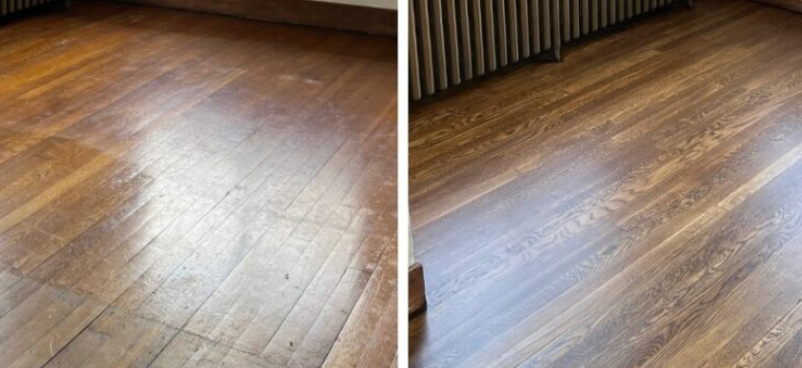
This approach improves:
- Dull, tired-looking traffic lanes
- Light surface scratches and small scuffs
- Minor wear where the finish is thinning, but not gone
Downtime is usually manageable for busy households. In many cases, you can walk carefully in socks later the same day or the next day. Still, rugs and heavy furniture need more time, because the finish keeps curing after it feels dry.
Full refinishing (sanding), a reset back to bare wood
Refinishing starts rough and ends smooth. Pros sand in stages, using coarser grit first to strip finish and flatten the surface, then finer grits to remove sanding marks. After that, you can keep the natural wood tone or apply stain, then seal and build up multiple finish coats.
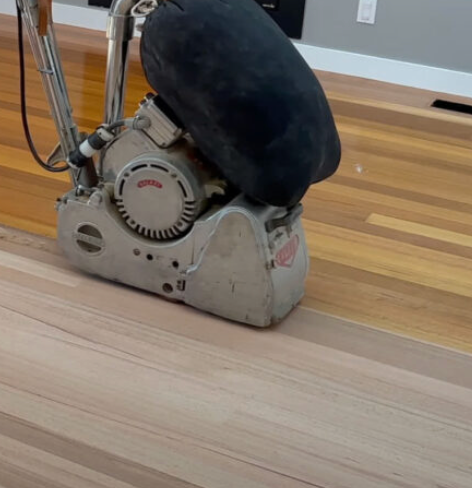
Refinishing can fix or improve:
- Deep scratches and gouges
- Gray wear spots and bare wood areas
- Uneven color from sun fading
- Some pet stains and water marks (not all stains sand out)
- Damaged boards (with repairs or replacements before sanding)
It also removes a thin layer of wood. That’s why you don’t want to refinish more often than needed.
For a deeper walk-through on the sanding process, see this hardwood floor refinishing guide.
A simple damage test that tells you which option will work
Before you book anything, do a quick check in good daylight. You’re trying to answer one question: is the finish intact everywhere?
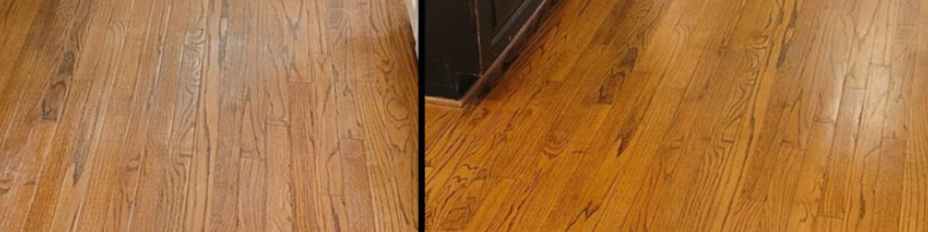
Use this at-home decision guide:
- Look at traffic lanes: If they’re dull but not raw, a recoat may work.
- Do the fingernail test: Run a nail across a scratch. If it doesn’t catch, it’s likely in the finish.
- Check for bare wood: Any exposed wood, even small patches, often pushes you toward refinishing (or at least repairs plus refinishing).
- Scan for peeling or flaking: A recoat won’t fix finish that’s already separating.
- Watch for dark stains: Black, gray, or very dark spots often sit in the wood fibers.
- Stop if you suspect wax or oil residue: Waxed floors and heavy oil-soap buildup can block adhesion. A pro needs to confirm what’s on the floor.
Also be careful with the “water drop test.” A tiny drop can show if the finish repels moisture, but don’t soak the floor or leave water sitting. If water darkens the wood quickly, the finish may be worn through.
If you want more visual cues, this post on signs it’s time to refinish floors is a helpful cross-check.
Pick a screen and recoat when the wood looks healthy and only the shine is gone
A recoat fits when your floor still looks “good bones,” just tired on top. You’ll usually see a wide, dull path in the hallway, or a cloudy area by the sofa where people pivot their feet.
Good signs for screening and recoat:
- Light scratches that don’t catch a fingernail
- No dark stains, no gray patches
- No bare wood anywhere, even at doorways
- No cupping, raised edges, or wavy boards
- No peeling, flaking, or bubbling finish
For example, a living room with kids and a dog often has a web of tiny scuffs. A buff and coat can bring back shine and protection before the wood takes a hit.
You likely need a full refinish when damage goes through the finish
Once the finish wears through, the wood starts acting like a sponge. Dirt and moisture settle in, then stains set. At that point, adding a new coat on top won’t erase the damage underneath.
Common signs you’re past “quick refresh” territory:
- Bare spots near sinks, exterior doors, or pet bowls
- Gray or black discoloration in traffic lanes
- Deep gouges, chips, or splintered edges
- Pet urine stains (often dark and irregular)
- Water damage, cupping, or warped boards
- Uneven stain color or visible sanding chatter from an older refinish
- Finish peeling in sheets or along board seams
Board repairs may come first, especially if the edges are broken or the subfloor has moisture issues.
Costs, timeline, and how much disruption to expect in a lived-in home
Most homeowners care about three things: how long it takes, how messy it is, and whether the house stays usable.
In general, a screen and recoat is a fraction of the cost because it’s faster and avoids heavy sanding. A full refinish often costs 2 to 3 times more because of labor, equipment, and multiple stages.
Cost and schedule change based on:
- Square footage and layout (open plan vs many small rooms)
- Stairs, landings, and tight edges
- Repairs, board replacement, or threshold work
- Stain changes and custom colors
- Number of finish coats and finish type
Atlanta weather matters too. In March and early spring, humidity can swing after rain. That can stretch cure times a bit, especially if windows stay closed for pollen and HVAC cycles more.
Screen and recoat is faster and cheaper, but it is not a makeover
A recoat often fits into a short window. Many jobs wrap quickly once the floor is prepped, and you usually don’t need to move out. Still, you should plan a pet strategy and keep foot traffic low until the finish firms up.
What it won’t do is change color or hide wear that’s in the wood grain. If the traffic lane is lighter because the wood itself faded or stained, the clear coat won’t repaint it.
Full refinishing takes longer, costs more, and may require more move-out planning
Refinishing is louder and more involved. Sanding can take a day or more, then stain (if chosen) needs time, then each coat needs dry time. Even with strong dust control, the process creates more disruption than a recoat.
Stairs and edges also slow things down. Crews can’t run big machines on stair treads, so that work takes patience and detail.
If you’re deciding whether you can stay home during the process, this guide on living in house while refinishing floors helps set expectations.
How to make the results last longer, whichever option you choose
A beautiful finish can fail early for one simple reason: grit. Tiny sand-like dirt acts like sandpaper under shoes and paws. Moisture is the other big enemy, especially around entry doors and kitchens.
A smart plan is to treat recoats as maintenance, not rescue. When you recoat at the first signs of traffic-lane dulling, you protect the wood before it stains. If you wait until bare wood shows, refinishing becomes the only real reset.
Small habits that prevent scratches and early wear
A few simple habits pay off fast:
- Felt pads on chair and table legs, replaced when they flatten
- Doormats inside and outside entries to catch grit
- No wet mopping; use a damp microfiber, not standing water
- Trim pet nails and wipe paws after rain
- Sweep or vacuum with a soft brush head, especially in hallways
- Lift heavy furniture, don’t drag it (even “just a little”)
- Rotate rugs so sun and wear hit evenly
- Breathable rug pads made for hardwood
High heels and narrow furniture feet can dent wood, even with a great finish. Use floor protectors where it makes sense.
When a maintenance recoat can save you from an expensive refinish later
Once the finish wears through, wood darkens in a way a recoat can’t erase. That’s the tipping point. A maintenance recoat, done before that happens, can extend the life of your floor for years.
Pros also help confirm compatibility. If the existing finish is contaminated by wax, polishes, or oil soap, they’ll address that first so the new coat bonds correctly. That one check can prevent peeling and wasted money.
Conclusion
Choose screening and recoat when the wood looks healthy and the wear is mostly loss of shine and light scratching. Choose a full refinish when damage reaches the wood, stains are present, boards are uneven, or you want a color change. When you’re unsure, a professional assessment is worth it, because picking the wrong option costs more in the long run.
Your home deserves to look its absolute best. At Atlanta Floor One, we specialize in turning worn-out wood into stunning centerpieces. We offer cost-effective rates, turnkey service, and our amazing team handles everything from the initial sanding to the final coat! Ready to fall in love with your home again? Make an appointment now